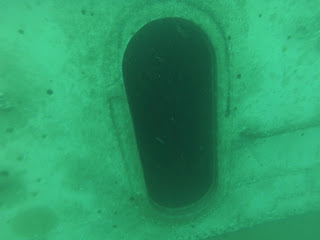
I love exploring underwater wrecks. In
these years, i have had the opportunity to explore a few of them, and
it´s one of my favorite diving activities. Although i visited a few
downed ships, wrecks can be everything man made that sank, like
air crafts and cars. These wrecks vary a lot in conservation, some are
near mint condition, some are just plain debris by the action of the
sea.
These wrecks can be put in two
categories :
- intentional – wrecks sunk in purpose to create artificial reefs, or underwater attractions.
- by accident – sinkings caused by accidents like collisions with reefs or other ships, storms, or military action.
They can have both historic
significance, and/or be a home to a lot of fish and corals, who seek
refuge on the debris/structures. So visiting these kind of spots is
always impressive :
- the magnitude of some structures are just awesome, like swimming along one ship and admiring it´s gigantic hull, or sometimes it´s propeller. I specially like to mentally reconstruct the ship as i go along;
- as it acts as shelter to underwater species, it´s also a good opportunity to view them and take some nice pictures and videos.
Diving in these kind of structures
require previous training, like a wreck diving specialty, deep diving, or nitrox
specialty. The first one helps the diver manage the risks associated
with wreck diving, plan the dive, and know what´s the required
equipment. Deep dive, and Nitrox specialties might be very useful in wreck diving, as some are
deep dives. Nitrox allows for an extended bottom time, lesser surface intervals ( some wrecks are big enough to require two
separate dives ), and physiological safety ( less
probability of decompression sickness ).
I have had tremendous fun in ship
wrecks, and i will continue to explore these man made structures.
What´s the most impressive wreck i´ve dived? The SS Thistlegorm in
the Red Sea. Besides being one of the top ten in Costeau´s diving
spots, it´s relatively intact, with the hull and cargo still in
place, and can be penetrated safely.
Have some nice wreck diving!
Atlantic Diver